Where are my blind spots?
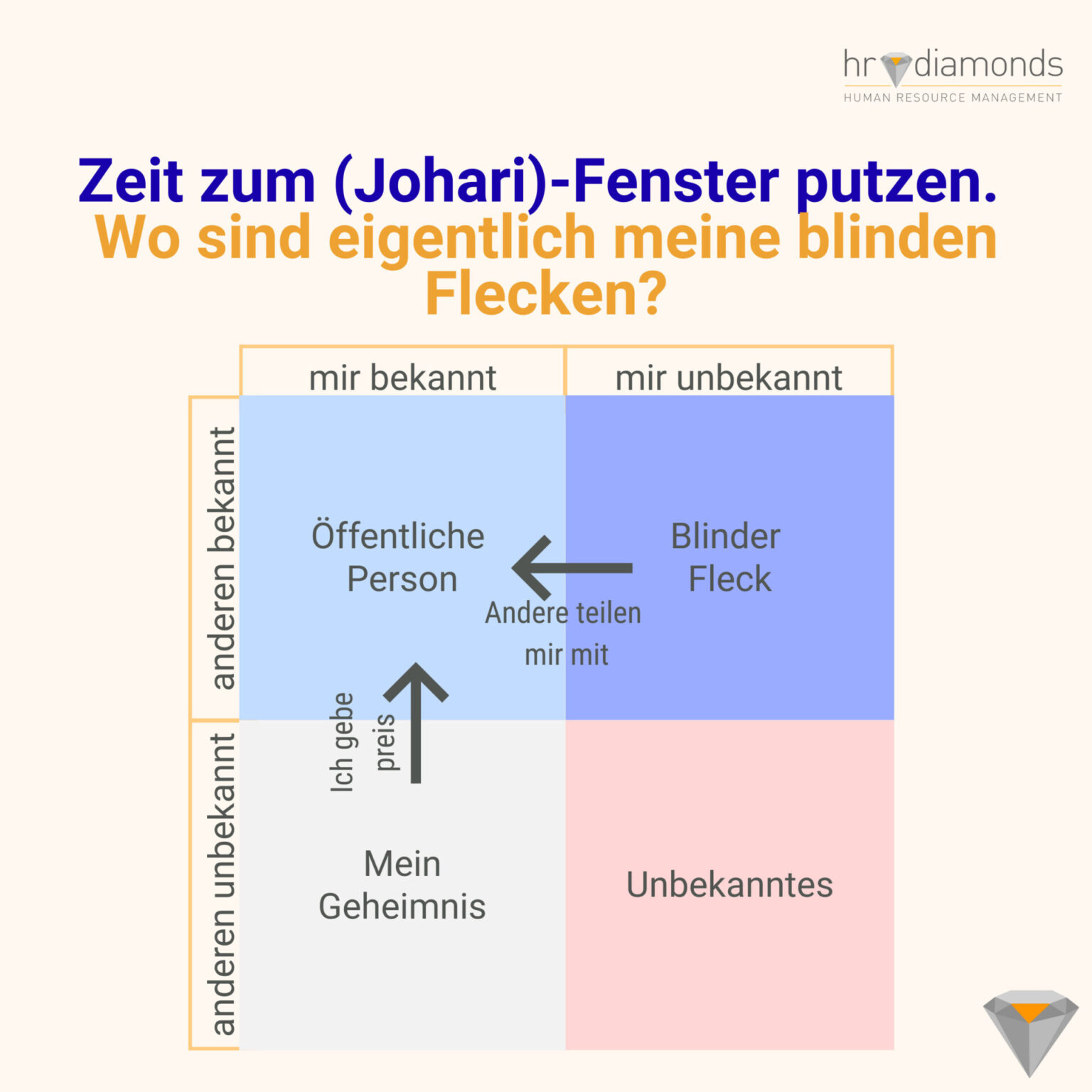
We all have them: behaviors and patterns of behavior that others perceivebut that we ourselves are not aware of. This is exactly where the Johari window according to Luft & Inghamcomes in, revealing the differences between self-image and external perception .
Four fields – one “aha” moment:
- Public: What I show of myself – and others know.
- Secret: What I know but don't (yet) share.
- Blind spot: What others see but I don't notice.
- Unknown: What no one has discovered (yet).
And now the crucial question:
How often do we really seek feedback, not just praise, but comments on our impact?
Mini-impulse for window cleaning:
Ask 3 people who experience you professionally (colleagues, customers, leaders):
- What do you appreciate about me?
- How do I sometimes make things difficult for you – without realizing it?
- Which three adjectives best describe my impact?
Because feedback is like glass cleaner for your self-image.
It brings things out of your blind spot and into the public, making collaboration easier and clearer.
What “blind spots” have you already discovered through feedback, and to what change has it lead?