Every day, we make decisions about people – in recruitment, in assessment centres, in leadership roles or when working together.
We do not rely solely on facts and observable behaviour. Experiences, expectations and unconscious thought patterns also influence how we perceive and judge others.
This is precisely where unconscious biases come into play.
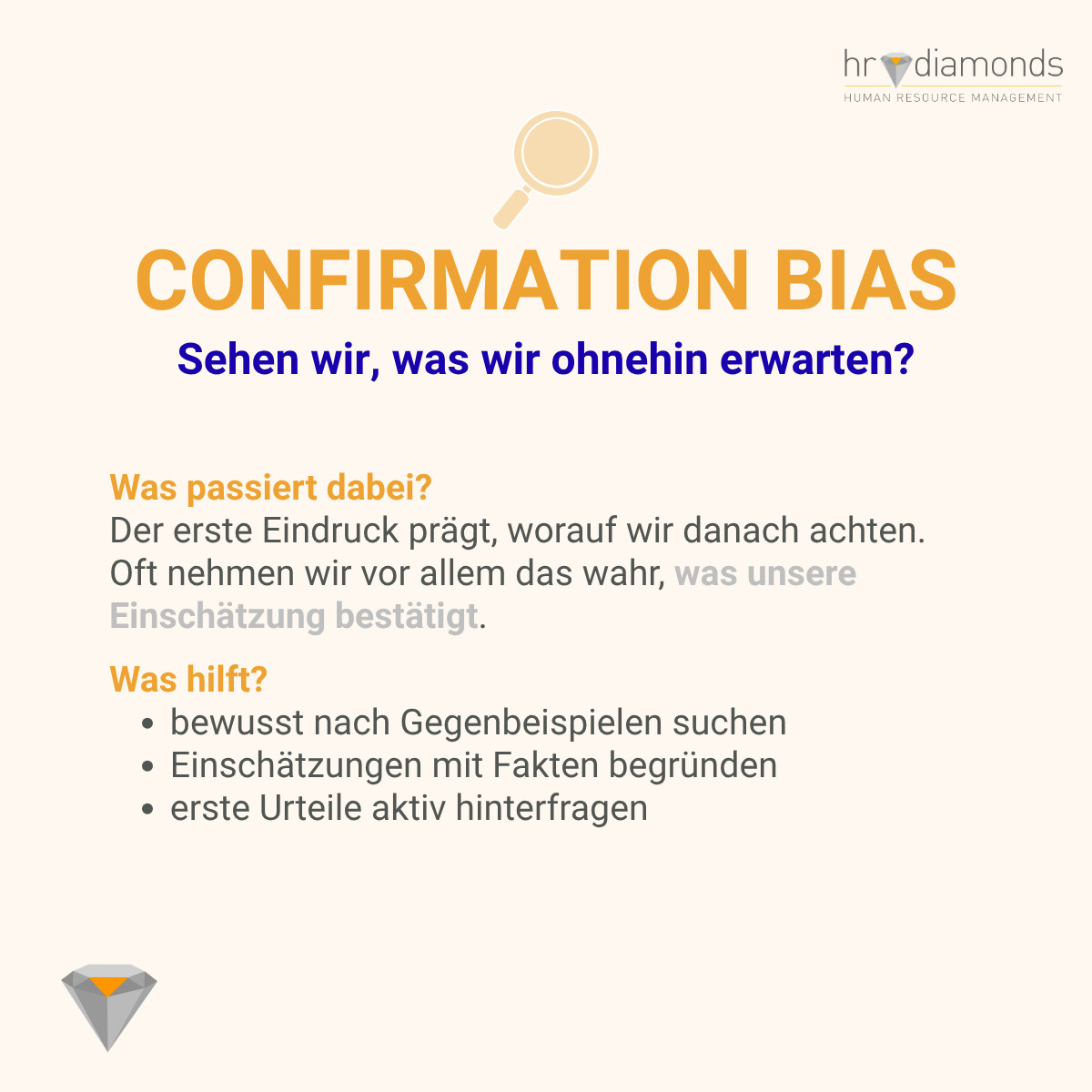
A first impression sticks.
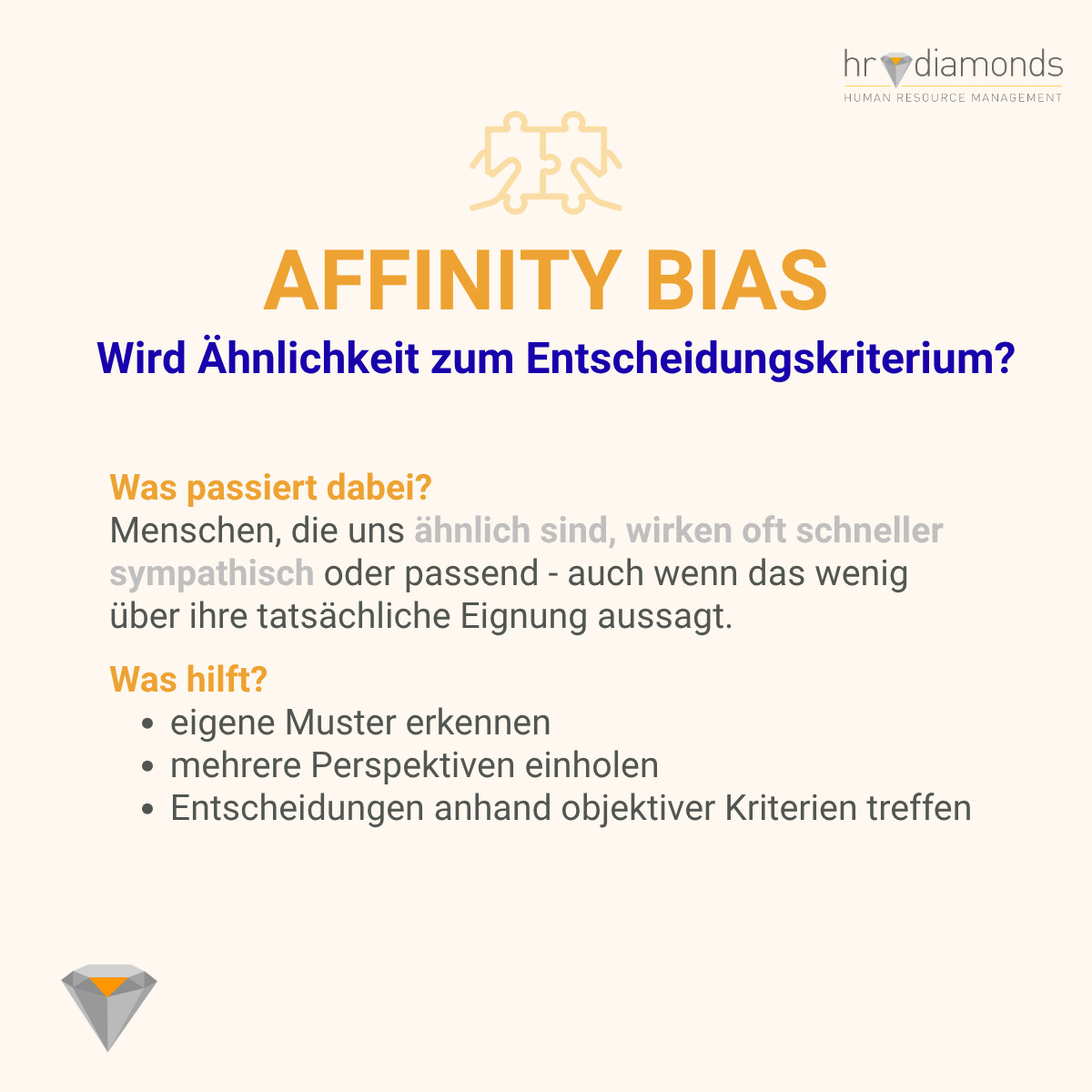
We immediately find someone likeable.
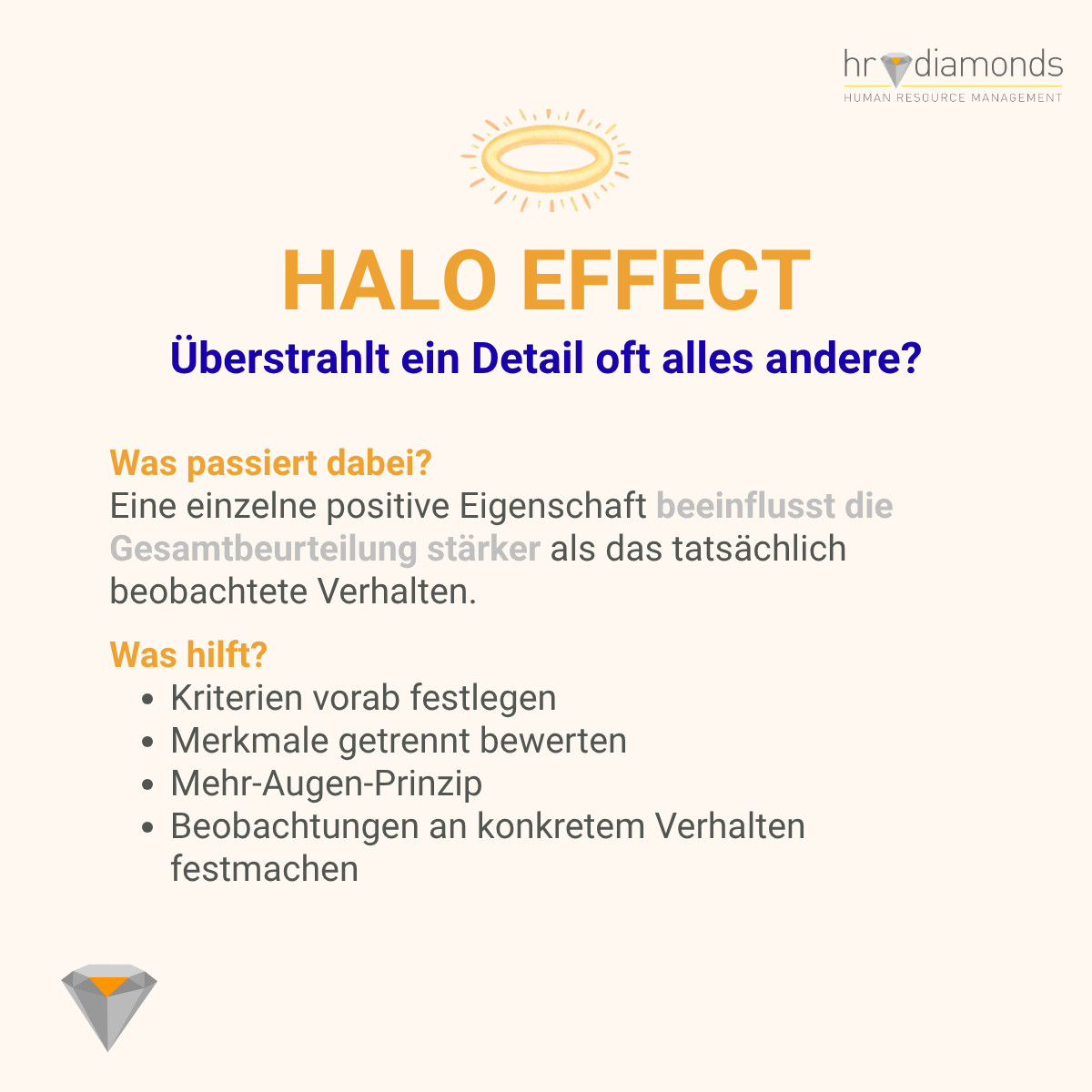
A particular point on their CV makes a strong impression.
Or we tend to notice, above all, what confirms an existing assessment.
Such tendencies in perception and judgement are human. They become relevant when they influence our assessment more strongly than what we actually observe.
This is why, particularly when it comes to recruitment decisions, it is worth taking a closer look
- What have I actually observed?
- What am I already interpreting?
- And on what am I basing my assessment?
Unconscious biases cannot simply be switched off. However, their influence can be reduced, for example through clear criteria, defined behavioural anchors, structured assessment processes and the conscious separation of observation and judgement.
At hrdiamonds, this is a key part of our work with assessment centres. That is why we specifically prepare observers for their role, establish a shared understanding of the assessment criteria and raise awareness of typical assessment biases.
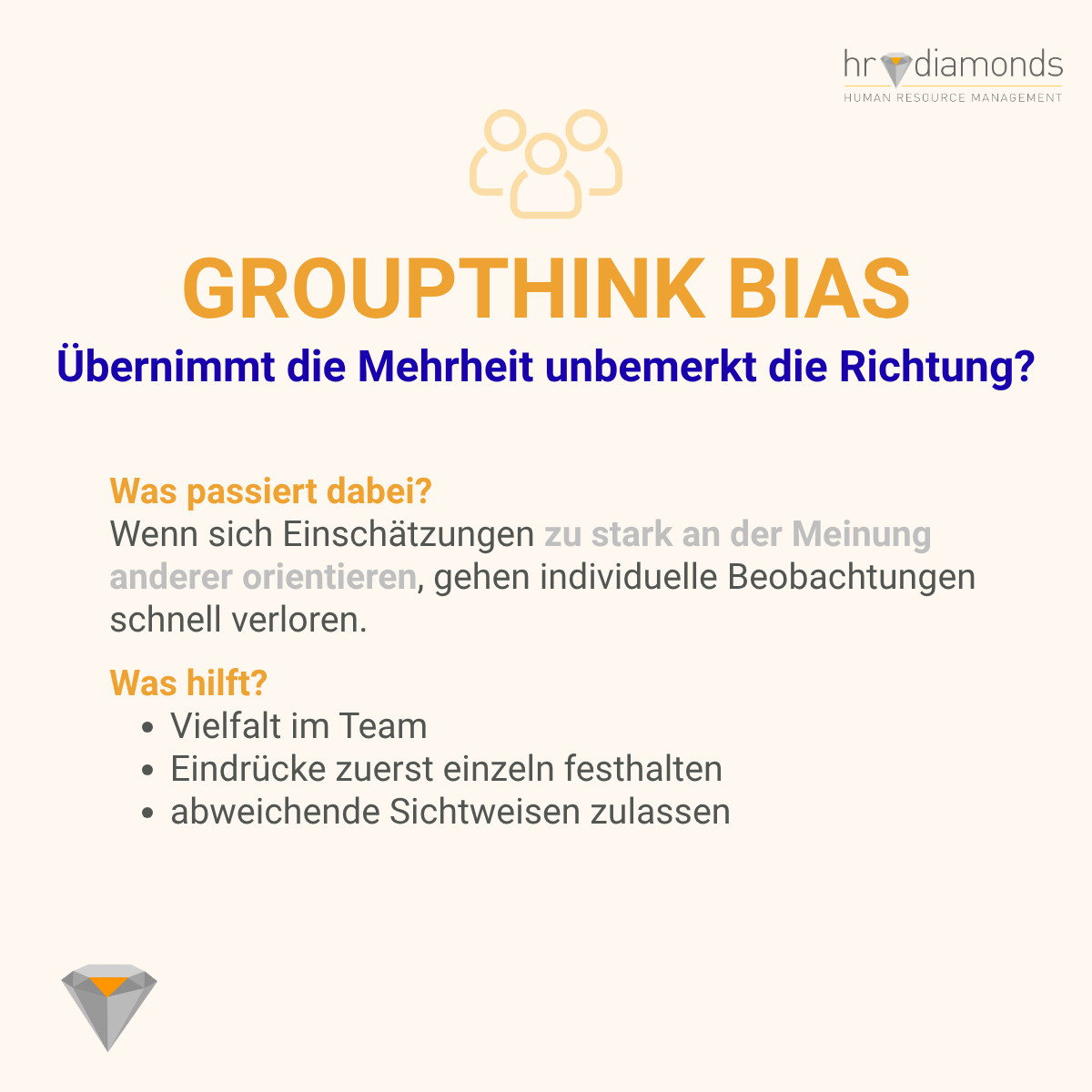
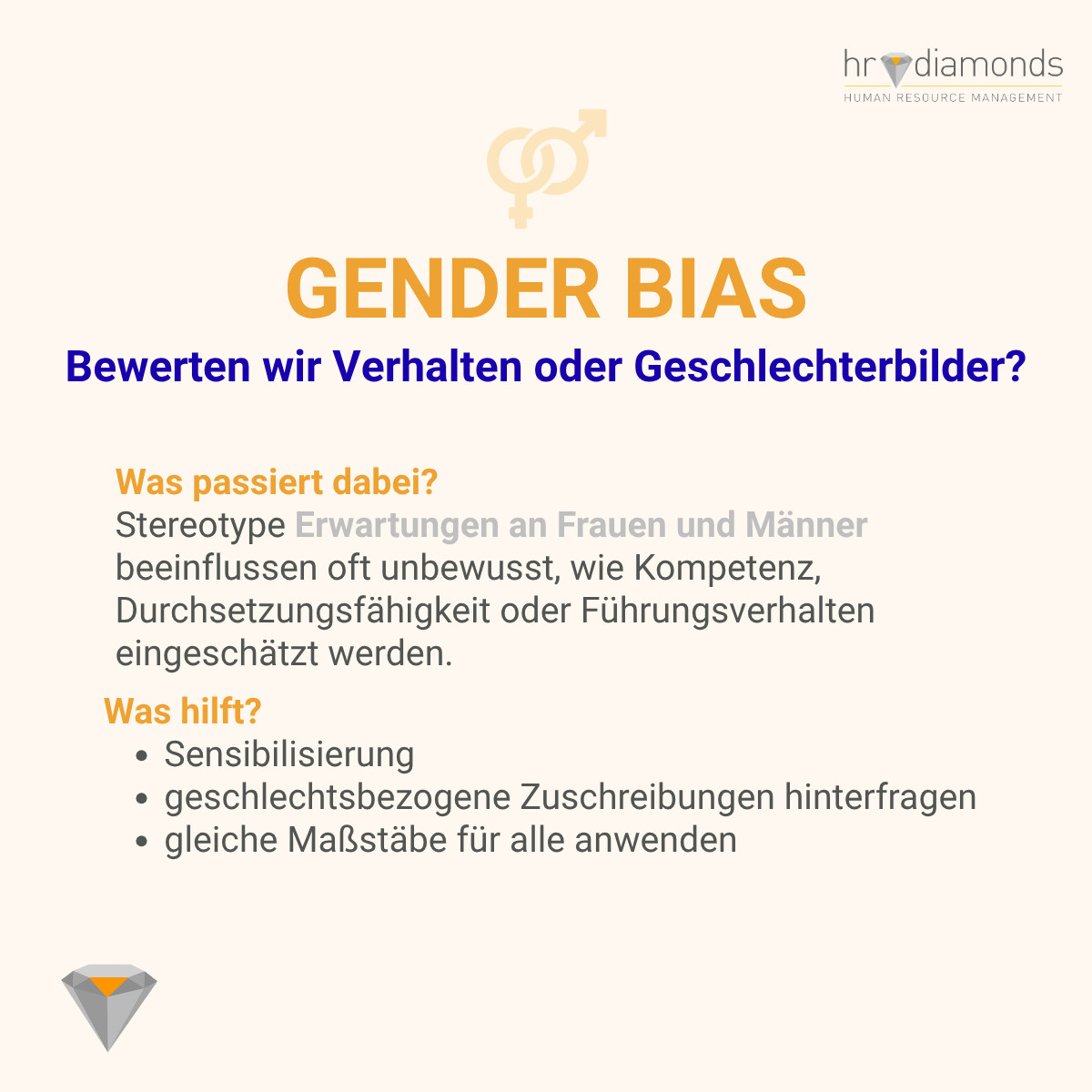
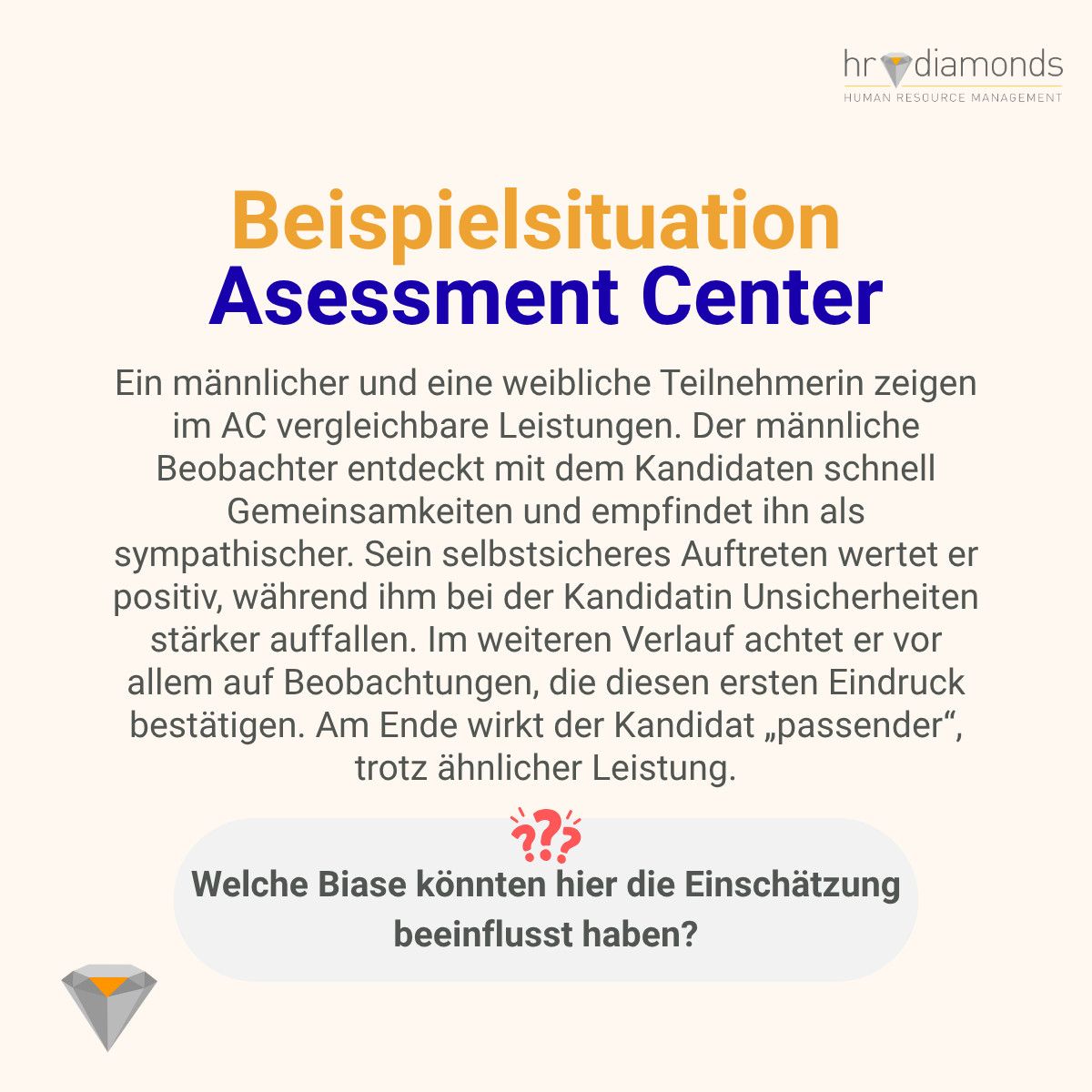
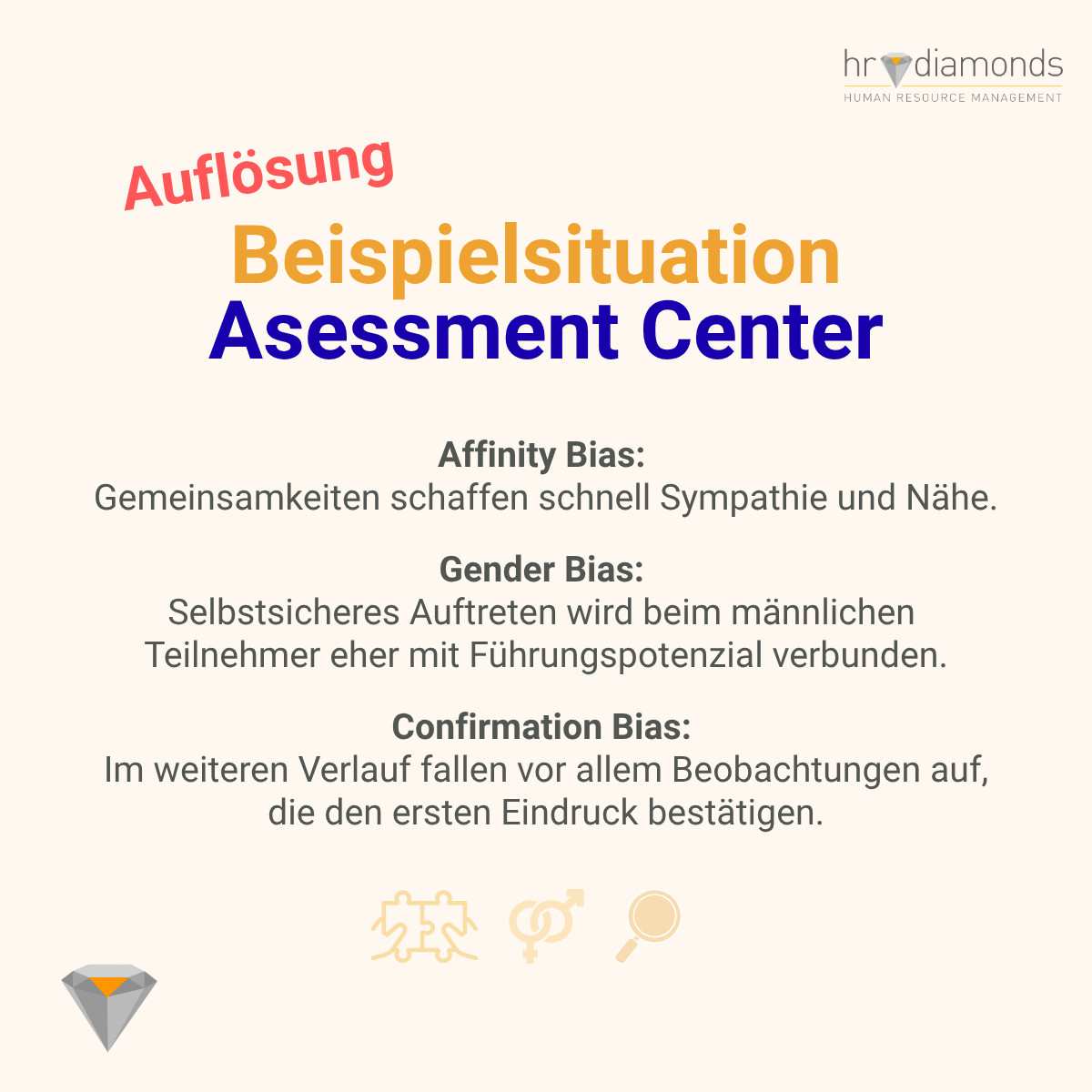
Five common biases encountered in everyday working life show how quickly perception turns into judgement, and what can help us make more informed decisions: